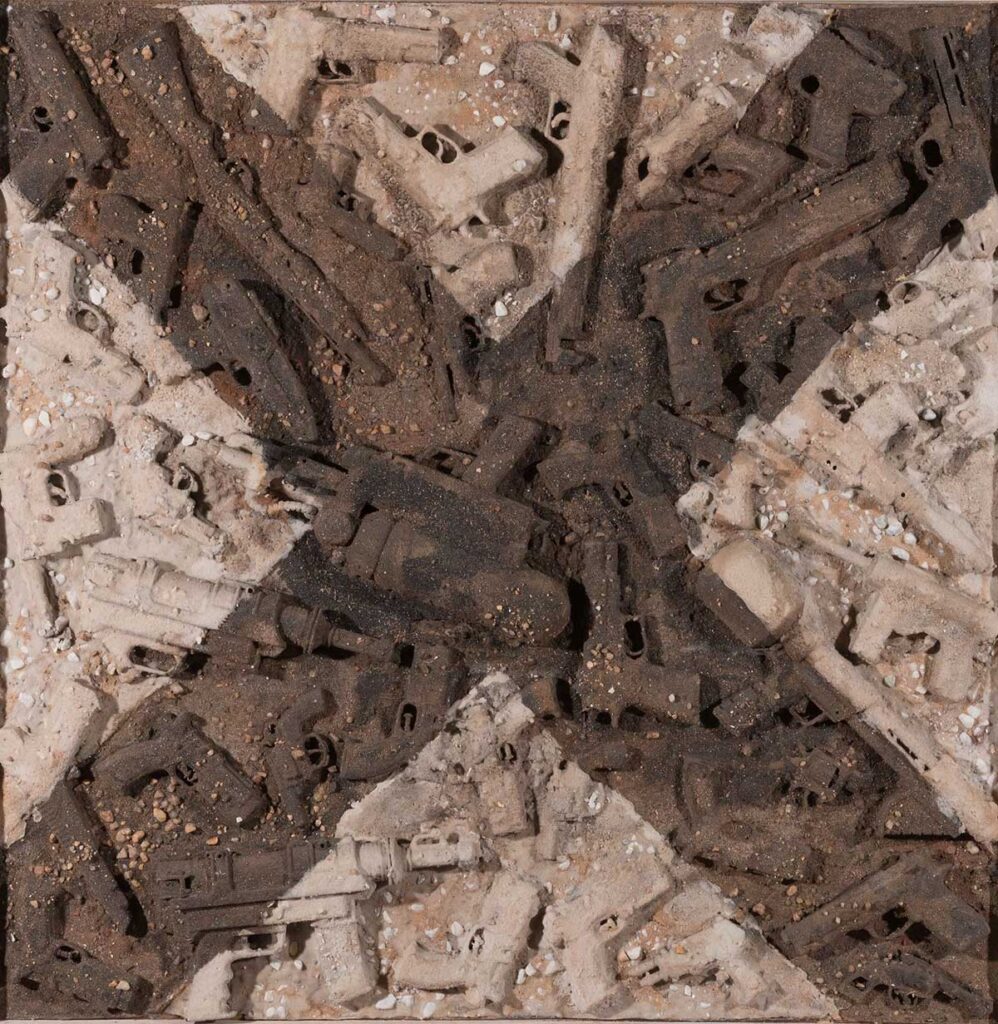
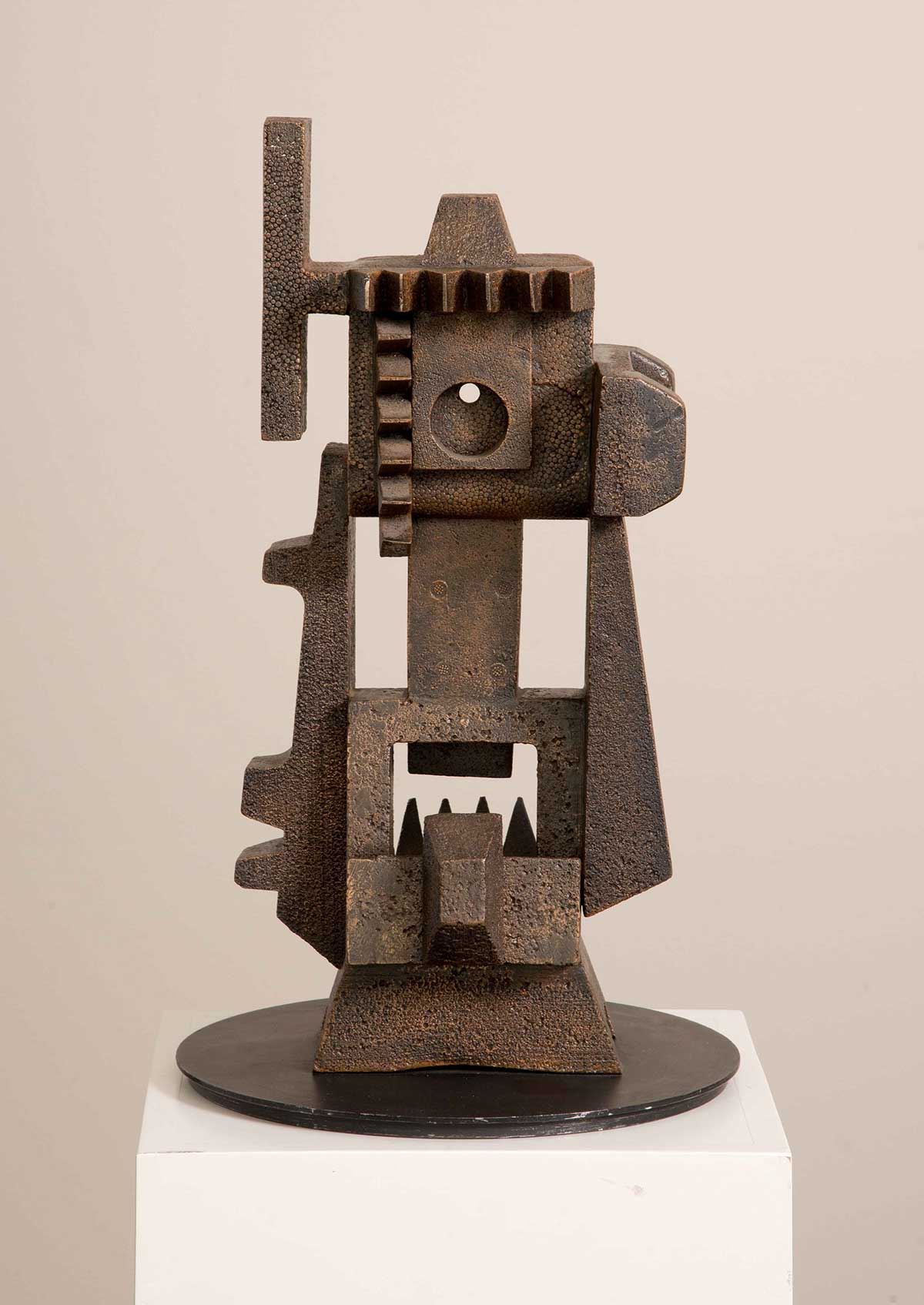
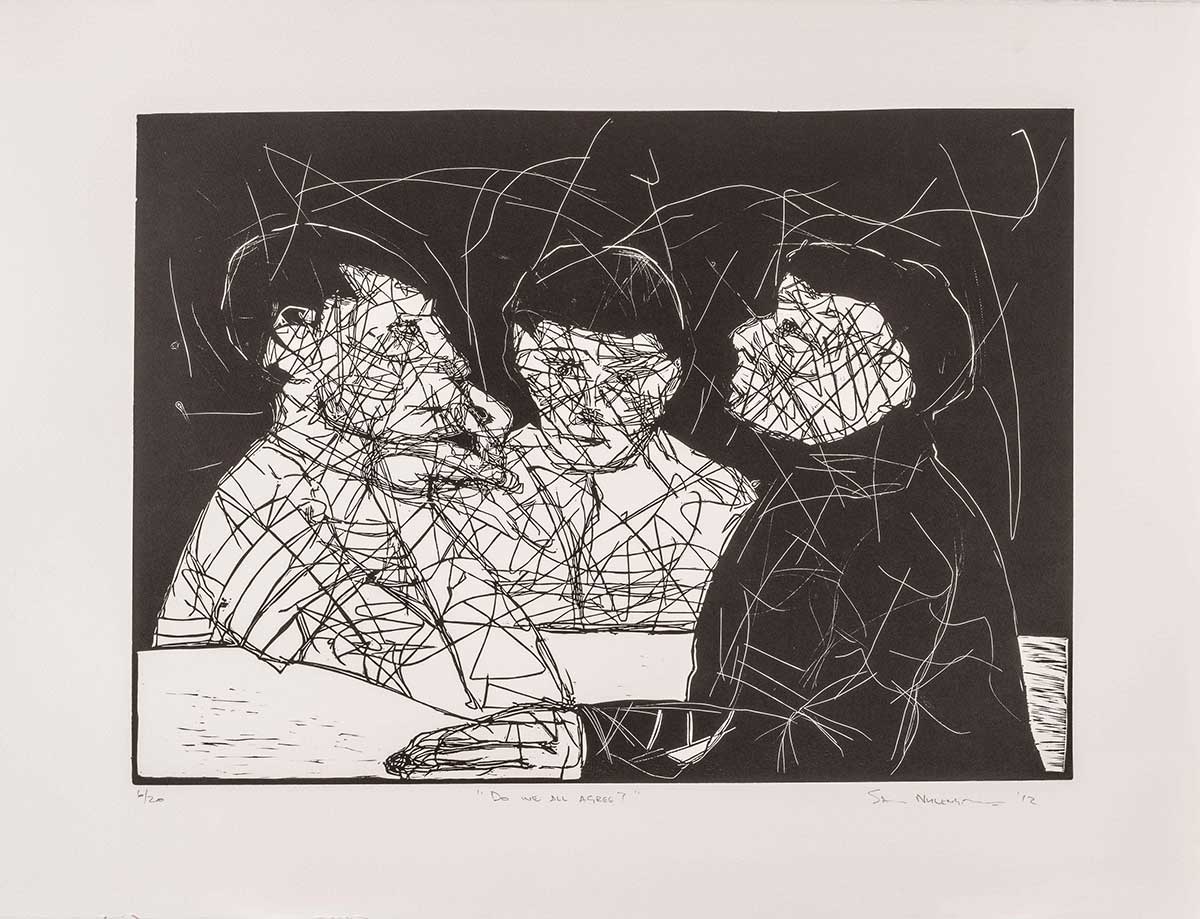
Presented by WALL, this exhibition brings together a carefully selected group of historical and contemporary artworks spanning the 1960s to the mid-2010s. Rather than tracing a linear chronology, the exhibition unfolds through a series of resonances and correspondences, pairing works across generations on the basis of shared formal concerns, material strategies, and conceptual inquiry.
Early works by artists such as Douglas Portway, Kenneth Bakker, and Günter van der Reis are placed in dialogue with later practices by Karel Nel, Dirk Meerkotter, Larry Scully, and Willem Boshoff. These pairings reveal enduring artistic questions: how form might give shape to the spiritual, how abstraction can carry metaphysical charge, and how material processes become sites of reflection rather than representation. Portway’s pursuit of spiritual symbolism through the dissolution of form, for instance, finds an echo in Nel’s investigations into objects, energy, and cosmological structure—two distinct yet aligned approaches to making the intangible perceptible.
Alongside these intergenerational dialogues, the exhibition also presents works that trace developments within individual practices over time. Artists such as Willem Boshoff, Sam Nhlengethwa, and Walter Oltmann are represented through works that reveal shifts in scale, medium, and emphasis, allowing viewers to consider continuity and change within a single artistic trajectory. Oltmann’s works further resonate with the broader curatorial context of the fair, engaging with themes of drawing, labour, and material intelligence.
The exhibition is anchored by the inclusion of an early work by Igshaan Adams, introduced as a contemporary counterpoint to the historical selection. Adams’s practice extends many of the exhibition’s core concerns—materiality, spirituality, repetition, and embodied making—into the present, demonstrating how these questions remain active and unresolved.
Together, the works presented by WALL propose an exhibition structured through comparison rather than conclusion. By placing past and present in sustained conversation, the exhibition invites attentive looking and slow engagement, revealing how artistic inquiry continues to reverberate across time, medium, and generation.